

Folgend nun einige Aussagen diverser Developer über das Shader Modell dritter Generation, welches aktuell in GeForce 6800 Ultra Platinen zum Einsatz kommt.
"PS 3.0 supports dynamic conditionals and much larger Shader programs, so it becomes possible to render in a single pass what would previously take many passes. For example, a renderer can more practically combine multiple light sources into a single pass, using a dynamic conditional to handle the properties of each individual light in a single pass.
Regarding the general question of "Why are conditionals needed in pixel Shader programs", I recommend comparing the situation to that of C programs. How many useful C programs don´t contain conditionals? Approximately none!" (Tim Sweeney, Founder, EPIC Games)
"In PS3.0 shaders it´s possible to decrease number of shaders using dynamic branching (one Shader for general lighting) and in such way decrease number of Shader switches and as result increase speed, and also we can utilize dynamic conditional early reject for some cases in both PS and VS and this also will increase speed." (Andrey Khonich, Crytek, Makers of Far Cry)
"It is more about freedom and removing limits rather than what can or can´t be done. Pixel Shader 2.0 would be more like programming in C with only half of the commands available and with half of the RAM available. Pixel Shader 3.0 offers the ´programmers´ a lot more flexibility in terms of control of the logic of execution and length of the program itself. The effects will be easier to write and probably will look more movie like. You may also be able to reduce the number of separate texture passes down as you can write more complex pixel shader programs to do the math necessary." (Rick Johnson, Senior Programmer, Raven Software)
"Any programmer will tell you that higher precision is better, all else being equal; if that high precision comes at an extreme cost then of course it will be used sparingly. As shaders get more complex, the precision requirements rise accordingly. Current games may not take advantage of the extra 8 bits of precision, but it´s likely that future games eventually will." (Mark Davis, Chief Scientist, Novalogic)
"With the GeForce 6800 series, NVIDIA brings long-awaited true high dynamic range imaging to gaming. The ability to perform blending and filtering on floating-point formats (combined with enormous processing power!) really makes for a wonderful feature that we´re definitely looking forward to fully exploit in our Serious Engine(tm)." (Dean Sekulic, Programmer, Croteam)
Bei Technical SEO geht es bei einem Relaunch oft um mehr als eine technisch „saubere“ Website. Eine Internationalisierung oder ein...
Fühlen Sie sich sicher in Ihrem Zuhause? Mehr als jede vierte Person in Deutschland (28,6 %) gab laut der SKiD-Dunkelfeldstudie...
Für viele Freizeitläuferinnen und -läufer ist nicht das Training selbst die größte organisatorische Herausforderung. Schwieriger ist der Übergang zwischen Arbeit,...
ASUS bringt die Creator-Laptops ProArt P14 (H7407) und P16 (H7607) mit Nvidia RTX Spark ab sofort in Deutschland auf den...
ASUS Republic of Gamers (ROG) startet den Verkauf des ROG Xbox Ally X20. Der Gaming-Handheld kombiniert ein durchscheinendes schwarzes Gehäuse...
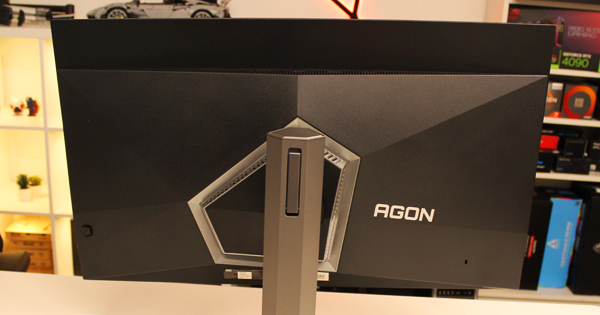
Mit dem AGON Pro AG326UZD2 hat AOC einen Gaming-Monitor mit OLED-Panel im Angebot. Der 240 Hz schnelle Monitor bietet 4K-Auflösung und weitere Features ab rund 900 Euro. Mehr dazu in unserem Test.
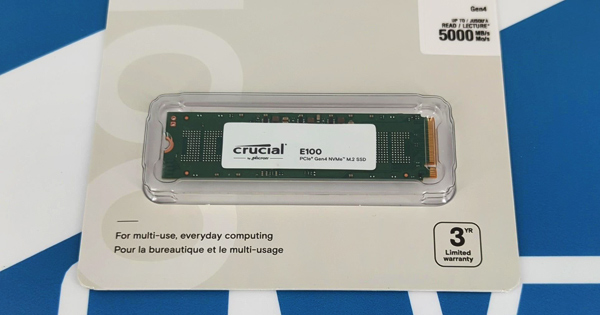
Die E100-SSD von Crucial basiert auf einem PCIe Gen4 Interface und QLC-Flashspeicher von Micron. Die Serie zielt auf Ein- und Umsteiger in die SSD-Welt ab. Wir haben uns das 1-TB-Modell im Test angesehen.